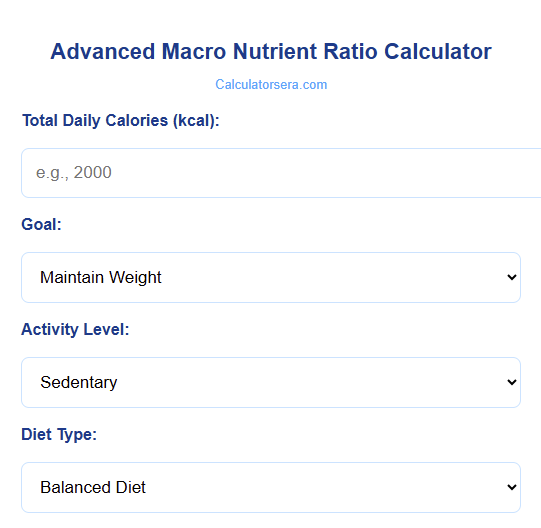
Advanced Macro Nutrient Ratio Calculator
Calculatorsera.com
5 Powerful Ways a Macro Nutrient Ratio Calculator Transforms Your Health
Introduction
Have you ever wondered why some people seem to have endless energy, maintain their weight effortlessly, or build lean muscle faster? The secret often lies in understanding macronutrients—the building blocks of your diet: proteins, carbohydrates, and fats.
A Macro Nutrient Ratio Calculator is a simple tool that helps you track these macronutrients, ensuring your body gets exactly what it needs. Whether your goal is weight management, muscle gain, or just feeling healthier, tracking macros can make a huge difference.
In this guide, we’ll walk you through what a macro calculator is, why you need one, how to use it, and tips to make the most of it—step by step, in plain language anyone can understand.
Table of Contents
What is a Macro Nutrient Ratio Calculator?
A Macro Nutrient Ratio Calculator is an online tool that helps you figure out the proportion of protein, carbs, and fats you should consume each day. Instead of guessing or manually calculating, it gives you accurate numbers in grams or percentages, making diet planning much easier.
Key Points:
- Measures macronutrient intake for your specific calorie goals.
- Provides grams or percentages of protein, carbs, and fats.
- Helps you plan meals efficiently.
- Saves time compared to manual calculations.
Unlike manually counting every gram, this calculator automates the math so you can focus on eating healthy, tasty meals without stress.

Why Do People Need It?
People use a macro calculator for many reasons, including:
- Fitness enthusiasts tracking their intake for better results.
- People losing weight who need precise control over calories.
- Athletes building muscle who need enough protein to recover and grow.
- Busy professionals who want quick meal guidance.
- Health-conscious individuals who want balanced nutrition for energy and wellbeing.
Tracking macros isn’t just about numbers—it’s about giving your body the nutrients it needs to perform optimally.
Everyday Use Cases
Here’s how a macro nutrient ratio calculator can help in daily life:
- Meal planning: Create a balanced meal plan without guesswork.
- Tracking protein for workouts: Ensure your muscles get enough protein for recovery.
- Managing carb intake for energy: Avoid energy crashes by keeping carbs in check.
- Adjusting fat intake: Support weight management and hormonal balance.
- Meal prepping: Plan meals for the week to meet your goals efficiently.
How a Macro Nutrient Ratio Calculator Works
Using a macro calculator is simple and usually follows these steps:
- Enter your total daily calories or goal (weight loss, maintenance, muscle gain).
- Select protein, carb, and fat targets or use recommended ratios.
- Calculator provides grams or percentages for each macronutrient.
- Optionally, it can adjust based on activity level or weight goals.
Example:
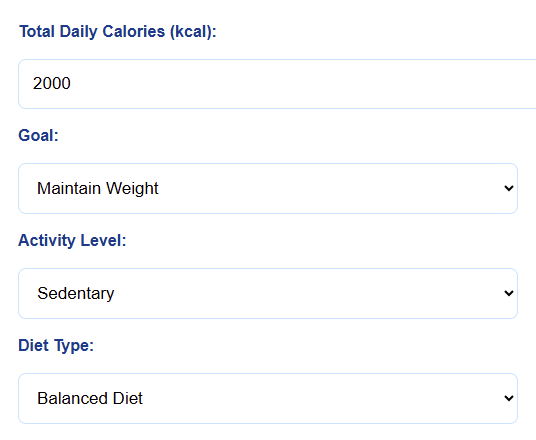
- Daily calories: 2000 kcal
- Macro ratio: 40% carbs, 30% protein, 30% fat
- Result:
- Carbs: 200g
- Protein: 150g
- Fat: 67g
This makes it easy to plan meals without guesswork.

Manual Calculation Method
If you want to calculate macros manually:
Step 1: Decide total daily calories.
Step 2: Assign a macro ratio (e.g., 40% carbs, 30% protein, 30% fat).
Step 3: Multiply calories by ratio, then divide by calories per gram:
- Protein: 4 kcal/g
- Carbs: 4 kcal/g
- Fat: 9 kcal/g
Example for 2000 kcal:
- Carbs: 2000 × 0.4 ÷ 4 = 200g
- Protein: 2000 × 0.3 ÷ 4 = 150g
- Fat: 2000 × 0.3 ÷ 9 ≈ 67g
Manual calculations can be confusing and time-consuming, especially if your ratios or calories change daily. This is where a macro calculator saves time.
Benefits of Using a Macro Nutrient Calculator
- Accuracy and speed: Avoid mistakes in calculations.
- Saves time: Automates math so you can focus on meals.
- Tracks diet goals: Helps with weight loss, muscle gain, or maintenance.
- Simple meal planning: Provides clear guidance for every meal.
- Beginner-friendly: Easy to use for anyone, even without nutrition knowledge.
Advanced Features
Some online calculators include extra features:
- Custom ratio settings: Adjust macros for specific goals.
- Multiple meal tracking: See macros per meal, not just daily totals.
- Integration with fitness apps: Syncs calories and exercise.
- Visual charts: Shows progress visually over time.
- Food suggestions: Recommends foods high in protein, carbs, or fat.
Comparison Table
| Method | Accuracy | Ease | Best For |
|---|---|---|---|
| Manual | Low | Hard | Beginners |
| Calculator | High | Easy | Everyone |
People Also Ask
How do I calculate macro ratios?
You can either use a calculator or manually assign percentages of protein, carbs, and fat to your daily calories. Calculators make it faster and more accurate.
What is the ideal macro ratio for weight loss?
A common approach is 40% carbs, 30% protein, and 30% fat. But this can vary based on activity, age, and body composition.
Can I track macros for muscle gain?
Absolutely! Ensure you consume enough protein to support muscle repair, moderate carbs for energy, and healthy fats for overall health.
Are online macro calculators accurate?
Yes, if you enter correct personal data like weight, activity level, and goals. They are much faster than manual calculations.
How often should I adjust macro ratios?
Adjust based on results and goals—usually every few weeks or after a change in activity level.
⭐ Understanding Macros on a Deeper Level
Most people know that food gives energy, but very few truly understand how different nutrients affect the body. When people start tracking macros, they are often surprised to learn how small changes—like adding more protein or reducing sugar—can transform energy, mood, and even sleep.
Why Do Macros Matter So Much?
Macros are more than numbers. They shape how your body grows, repairs, and functions:
- Protein builds muscles, repairs tissues, strengthens nails, hair, and skin, and helps you feel full.
- Carbohydrates are the body’s main fuel. They support brain function, movement, and energy.
- Fats help with hormone balance, vitamin absorption, and long-term energy. Healthy fats even improve brain health.
When these three macros are balanced correctly, your body works smoothly like a well-oiled machine.
⭐ The Science Behind Macro Ratios
Different macro ratios lead to very different results in the body. For example:
- Higher protein helps build muscle and reduces appetite.
- Higher carbs help with energy, sports performance, and brain function.
- Higher fats keep you full longer and stabilize hormones.
🔹 Common Macro Ratios & Their Purpose
| Goal | Protein | Carbs | Fats |
|---|---|---|---|
| Weight Loss | 30–35% | 25–40% | 25–30% |
| Muscle Gain | 30% | 40–50% | 20–25% |
| Balanced Lifestyle | 30% | 40% | 30% |
| Keto Diet | 20% | 5–10% | 70–75% |
With a macro calculator, you don’t have to guess which ratio is best. It instantly adjusts based on your:
- height
- weight
- age
- activity level
- fitness goal
- eating style
This personalization is something manual calculations cannot easily offer.
⭐ Why Most People Fail at Nutrition (And How a Calculator Fixes It)
Many people struggle with their diet because they only count calories — not nutrients.
For example:
- A 300-calorie sugary snack = low energy, cravings, fat storage
- A 300-calorie protein-rich meal = strong muscles, stable energy, no cravings
👉 This is why macro tracking is more powerful than calorie tracking.
It looks at the quality of food, not just numbers.
Problems People Face Without a Macro Calculator
- Overestimating carbs (especially hidden sugars)
- Under-eating protein, making fat loss and muscle growth harder
- Eating too much fat, without realizing fat is calorie-dense
- Not understanding portion sizes
- Inconsistent tracking
A macro calculator solves all these problems by giving exact numbers you can follow daily.
⭐ How to Apply Macro Ratios to Real Life
Most beginners struggle with one question:
“Okay, I know my macros… but what do I actually eat?”
Here’s a simple example meal plan for someone eating 2000 calories with a 40/30/30 ratio:
✔ Breakfast
- 3 eggs
- 1 slice whole grain toast
- 1 cup fruit
- 1 tbsp peanut butter
✔ Lunch
- Grilled chicken breast
- Rice
- Steamed vegetables
✔ Snack
- Greek yogurt or protein shake
✔ Dinner
- Salmon
- Sweet potatoes
- Olive-oil salad
This makes macro tracking extremely easy — you don’t need complex recipes or complicated rules.
⭐ Visualizing Macros: Why Charts Help
Charts make it easier for readers to understand their macro breakdown.
🥧 Macro Ratio Pie Chart
The Macro Ratio Pie Chart is a simple visual tool that helps you understand how your daily calories are divided into carbohydrates, proteins, and fats. Instead of reading numbers or doing manual calculations, this chart shows your macro breakdown in an easy, colorful circle. Each slice represents a percentage of your total daily intake, making it quick to see whether your diet is balanced or not.
For example, a 40% carbs, 30% protein, and 30% fat chart shows you exactly how much of your calories should come from each nutrient group. This helps you plan meals more effectively, choose the right foods, and stay in line with your fitness or weight goals. The chart is especially helpful for beginners because it turns complex nutrition data into a simple picture. It makes tracking macros easier, faster, and more enjoyable, no matter your health goal.
⭐ How to Use a Macro Calculator for Special Diets
Every diet style has its own macro approach. Here’s how the calculator helps:
🔸 For Weight Loss
The calculator reduces carbs slightly and increases protein to control hunger.
🔸 For Muscle Building
It increases carbs and protein to support recovery and growth.
🔸 For Keto
It adjusts fat levels to 70–75% automatically.
🔸 For Intermittent Fasting
It compresses calories into a shorter eating window but keeps macros balanced.
🔸 For Vegan Diets
It suggests plant-based proteins such as:
- tofu
- lentils
- chickpeas
- quinoa
- soy milk
This flexibility helps every user — no matter their lifestyle.
⭐ Real-Life Example: How Macros Transform Your Body
🧍 Case Study: John, 28
Goal: Lose weight & increase energy
Calories: 1800
Macro Ratio: 40% carbs, 30% protein, 30% fat
After 6 weeks:
✔ Lost 4.2 kg
✔ Felt more energetic
✔ Cravings reduced by 50%
✔ Improved workout performance
🧍♀️ Case Study: Aisha, 32
Goal: Build muscle
Calories: 2300
Macro Ratio: 50% carbs, 30% protein, 20% fat
After 8 weeks:
✔ Gained lean muscle
✔ Better workout recovery
✔ Skin and hair improved due to balanced nutrients
These real-life results prove how powerful macro tracking can be.
⭐ Tips to Make Macro Tracking Easier
Here are some simple habits:
✔ Use a food scale
Portion sizes are often misunderstood.
✔ Track meals before eating
This prevents overeating.
✔ Drink enough water
Hydration helps digestion and fat loss.
✔ Prepare meals ahead
Meal prep saves time and prevents unhealthy eating.
✔ Stick to whole foods
Avoid processed foods which confuse macro calculations.
These simple steps make a big difference in results.
⭐ Advanced Macro Tracking for Athletes
Athletes often need more precise macro tracking.
Why?
Because training demands more fuel and more recovery.
Macro breakdown for athletes:
- Carbs: 45–55%
- Protein: 25–30%
- Fats: 20–25%
The macro calculator automatically calculates these values based on:
- workout frequency
- training type
- intensity
This ensures athletes perform at their peak.
⭐ Adjusting Macros Over Time
Your body changes — so your macros should too.
Experts recommend adjusting macros:
- every 4–8 weeks
- after major weight changes
- after activity level changes
- when hitting plateaus
A macro calculator makes this simple. Just re-enter your updated information and get new ratios instantly.
⭐ Why a Macro Calculator is Better Than Dieting
Diets usually restrict foods.
Macro tracking gives freedom.
No food is “bad” — it’s about balance.
You can still enjoy:
- pizza
- burgers
- sweets
as long as they fit your macro numbers.
This makes macro tracking sustainable, unlike most diets.
FAQ Section
What is the best macro ratio for beginners?
Start with 40% carbs, 30% protein, 30% fat. Track for a few weeks and adjust based on results.
Can I use a macro calculator for a vegan diet?
Yes. Just select plant-based protein, healthy fats, and carbs when planning meals.
How does activity level affect macros?
Active individuals may need more carbs for energy and protein for muscle repair.
Is it better to count calories or macros?
Counting macros is more precise because it focuses on nutrient quality, not just calories.
How do I track macros without apps?
You can use spreadsheets or a simple notebook, but apps make tracking much easier.
Can I adjust macros for intermittent fasting?
Yes. Just ensure your total daily intake meets your macro goals within your eating window.
What mistakes do people make while tracking macros?
Common mistakes include misestimating portion sizes, skipping fats, or ignoring micronutrients.
How accurate are online macro calculators?
Very accurate if you enter correct personal data. They automate math and reduce errors.
Can kids or teens use macro calculators?
Yes, but always consult a healthcare professional for guidance.
How to balance macros for energy and performance?
Include complex carbs, moderate protein, and healthy fats spread across meals to maintain energy.
⭐ Final Thoughts
A Macro Nutrient Ratio Calculator is one of the easiest and most effective tools for improving your health. It simplifies nutrition, removes guesswork, and allows you to eat in a balanced and enjoyable way.
Whether your goal is weight loss, muscle gain, better energy, or general health, macro tracking gives you control and results you can see and feel.
The Macro Nutrient Ratio Calculator empowers individuals to take charge of their dietary choices by providing precise macro ratios tailored to their specific needs. By promoting a balanced approach to nutrition, it enables users to enjoy a wide variety of foods while remaining aligned with their health goals.
Conclusion
A Macro Nutrient Ratio Calculator is a powerful tool for anyone looking to improve their health, manage weight, or boost energy. It makes meal planning, tracking, and adjusting your diet simple and effective.
By understanding your protein, carb, and fat needs, you can make informed choices and reach your goals faster. Start using a macro calculator today and experience a more balanced, energized, and empowered lifestyle.
The Macro Nutrient Ratio Calculator is an essential resource for individuals aiming for weight loss. This calculator facilitates the creation of customized macro ratios that align with personal health objectives, ensuring users maintain a balanced diet. With its user-friendly interface, the tool simplifies the process of meal planning and nutrient tracking, allowing for effective dietary adjustments. Embrace the benefits of this calculator for weight loss and take a proactive step towards achieving your wellness goals.
Thank you for reading this post, don't forget to subscribe!